Utilization of in silico-designed primers for SARS-CoV-2 Molecular Surveillance using Direct PCR Product Sequencing Surveillance (DPPSS) Method
DOI:
https://doi.org/10.21141/PJP.2026.609Keywords:
COVID-19, virus variants, PCR, sequencing, molecular diagnostic techniquesAbstract
Background. The COVID-19 pandemic caused by SARS-CoV-2 significantly strained healthcare systems in the Philippines, highlighting the critical importance of reliable molecular diagnostics and genomic surveillance. Although vaccination efforts and public health measures mitigated disease impact, the continued emergence of viral variants underscores the need for sustainable local surveillance strategies. Strengthening in-country capacity through the development of in silico–designed primers and cost-effective sequencing approaches can enhance rapid variant detection and improve preparedness for future emerging infectious diseases.
Objective. This paper offers a method in detecting the SARS-CoV-2 virus and its variants. A direct PCR product sequencing surveillance or DPPSS offers a new possibility of detecting emerging disease by using PCR products and using it as templates in determining the base sequence.
Methodology. A total of 20 random positive samples for SARS-COV-2 from March 2022 sample pool in Metro Manila, Philippines was used in this study. The RNA was extracted using Purelink™ RNA Mini Kit, quantified with NanoDrop, and subjected to one-step RT-PCR. An in-house designed in silico primers were used in this study by using thermodynamic parameters to optimize specificity and amplification efficiency, considering GC contents, balanced Tm, minimal secondary structures and cross-dimers and in silico validation via Basic Local Alignment Search Tool (BLAST) against reference databases.
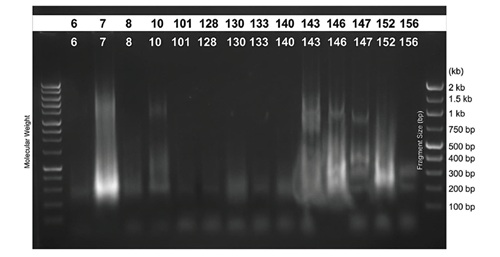
Amplicons were analyzed through gel electrophoresis, sequenced, and analyzed using BioEdit software. A nucleotide BLAST search identified COVID-19 variants, confirmed using Cov-Lineages website.
Results. In silico designed primers (S1, S2, E/M, Orf1ab) collectively exhibited 100% sensitivity in detecting SARS-CoV2 in nasopharyngeal swab samples. Individual primer sensitivities varied, with Orf1ab at 58.82% and E/M at 90.91%. Our analysis revealed the prevalence of Omicron sublineage BA.2 in the Philippines, aligning with local data showing more BA.2 cases than the global predominance of BA.1.
Conclusion. Combined in silico primers (S1, S2, E/M, ORF1ab) accurately detect SARS-COV-2 and its variants. This method provides a valuable diagnostic and surveillance tool for public health management.
Downloads
References
Centers for Disease Control and Prevention. About COVID-19. Updated 2023. https://cdc.gov/coronavirus/2019-ncov
Centers for Disease Control and Prevention. SARS-CoV-2 variant classifications and definitions. Updated 2023. https://stacks.cdc.gov/view/cdc/107682
World Health Organization. WHO COVID-19 dashboard. 2026. https://data.who.int/dashboards/covid19/cases
Department of Health Republic of the Philippines. COVID-19 case tracker. 2024. https://doh.gov.ph/diseases/covid-19/covid-19-case-tracker/
Falzone L, Gattuso G, Tsatsakis A, Spandidos DA, Libra M. Current and innovative methods for diagnosis of COVID-19 infection (review). Int J Mol Med. 2021;47(6):100. https://pubmed.ncbi.nlm.nih.gov/33846767 https://www.ncbi.nlm.nih.gov/pmc/articles/PMC8043662 https://doi.org/10.3892/ijmm.2021.4933 DOI: https://doi.org/10.3892/ijmm.2021.4933
Rai P, Kumar BK, Deekshit VK, Karunasagar I, Karunasagar I. Detection technologies and recent developments in the diagnosis of COVID-19 infections. Appl Microbiol Biotechnol. 2021;105(2):441-55. https://pubmed.ncbi.nlm.nih.gov/33394144 https://www.ncbi.nlm.nih.gov/pmc/articles/PMC7780074 https://doi.org/10.1007/s00253-020-11061-5 DOI: https://doi.org/10.1007/s00253-020-11061-5
UN News. WHO chief declares end to COVID-19 as a global health emergency. Published May 5, 2023. https://news.un.org/en/story/2023/05/1136367
Dorit RL, Ohara O, Hwang CBC, Kim JB, Blackshaw S. Direct DNA sequencing of PCR products. Curr Protoc Mol Biol. 2001;Chapter15:Unit 15.2. https://pubmed.ncbi.nlm.nih.gov/18265116 https://doi.org/10.1002/0471142727.mb1502s56 DOI: https://doi.org/10.1002/0471142727.mb1502s56
Huang Y, Yang C, Xu XF, Liu SW. Structural and functional properties of SARS-CoV-2 spike protein: potential antiviral drug development for COVID-19. Acta Pharmacol Sin. 2020;41(9):1141-9. https://pubmed.ncbi.nlm.nih.gov/32747721 https://www.ncbi.nlm.nih.gov/pmc/articles/PMC7396720 https://doi.org/10.1038/s41401-020-0485-4 DOI: https://doi.org/10.1038/s41401-020-0485-4
Thomas S. The structure of the membrane protein of SARS-CoV-2 resembles the sugar transporter SemiSWEET. Pathog Immun. 2020;5(1):342-63. https://pubmed.ncbi.nlm.nih.gov/33154981 https://www.ncbi.nlm.nih.gov/pmc/articles/PMC7608487 https://doi.org/10.20411/pai.v5i1.377 DOI: https://doi.org/10.20411/pai.v5i1.377
V'kovski P, Kratzel A, Steiner S, Stalder H, Thiel V. Coronavirus biology and replication: implications for SARS-CoV-2. Nat Rev Microbiol. 2021;19:155-70. https://pubmed.ncbi.nlm.nih.gov/33116300 https://www.ncbi.nlm.nih.gov/pmc/articles/PMC7592455 https://doi.org/10.1038/s41579-020-00468-6 DOI: https://doi.org/10.1038/s41579-020-00468-6
Mollaei HR, Afshar AA, Kalantar-Neyestanaki D, Fazlalipour M, Aflatoonian B. Comparison of five primer sets from different genome regions of COVID-19 for detection of virus infection by conventional RT-PCR. Iran J Microbiol. 2020;12(3):185-93. https://pubmed.ncbi.nlm.nih.gov/32685113 https://www.ncbi.nlm.nih.gov/pmc/articles/PMC7340604 DOI: https://doi.org/10.18502/ijm.v12i3.3234
Park M, Won J, Choi BY, Lee CJ. Optimization of primer sets and detection protocols for SARS-CoV-2 using PCR and real-time PCR. Exp Mol Med. 2020;52(6):963-77. https://pubmed.ncbi.nlm.nih.gov/32546849 https://www.ncbi.nlm.nih.gov/pmc/articles/PMC7295692 https://doi.org/10.1038/s12276-020-0452-7 DOI: https://doi.org/10.1038/s12276-020-0452-7
Qu W, Li J, Cai H, Zhao D. PCR primer design for the rapidly evolving SARS-CoV-2 genome. Methods Mol Biol. 2022;2392:185-97. https://pubmed.ncbi.nlm.nih.gov/34773624 https://doi.org/10.1007/978-1-0716-1799-1_14 DOI: https://doi.org/10.1007/978-1-0716-1799-1_14
Otero MCB, Murao LAE, Limen MAG, et al. Multifaceted assessment of wastewater-based epidemiology for SARS-CoV-2 in selected urban communities in Davao City, Philippines: a pilot study. Int J Environ Res Public Health. 2022;19(14):8789. https://pubmed.ncbi.nlm.nih.gov/35886640 https://www.ncbi.nlm.nih.gov/pmc/articles/PMC9324557 https://doi.org/10.3390/ijerph19148789 DOI: https://doi.org/10.3390/ijerph19148789
Mentes A, Papp K, Visontai D, et al. Identification of mutations in SARS-CoV-2 PCR primer regions. Sci Rep. 2022;12(1):18651. https://pubmed.ncbi.nlm.nih.gov/36333366 https://www.ncbi.nlm.nih.gov/pmc/articles/PMC9636223 https://doi.org/10.1038/s41598-022-21953-3 DOI: https://doi.org/10.21203/rs.3.rs-1838361/v1
Tablizo F, Lapid C, Maralit B, et al. Analysis of SARS-CoV-2 genome sequences from the philippines: genetic surveillance and transmission dynamics. medRxiv. Published 2020. https://doi.org/10.1101/2020.08.22.20180034 DOI: https://doi.org/10.1101/2020.08.22.20180034
Saldivar-Espinoza B, Garcia-Segura P, Novau-Ferré N, et al. The mutational landscape of SARS-CoV-2. Int J Mol Sci. 2023;24(10):9072. https://pubmed.ncbi.nlm.nih.gov/37240420 https://www.ncbi.nlm.nih.gov/pmc/articles/PMC10219494 https://doi.org/10.3390/ijms24109072 DOI: https://doi.org/10.3390/ijms24109072
Jain A, Rophina M, Mahajan S, et al. Analysis of the potential impact of genomic variants in global SARS-CoV-2 genomes on molecular diagnostic assays. Int J Infect Dis. 2021;102:460-2. https://pubmed.ncbi.nlm.nih.gov/33181329 https://www.ncbi.nlm.nih.gov/pmc/articles/PMC7834429 https://doi.org/10.1016/j.ijid.2020.10.086 DOI: https://doi.org/10.1016/j.ijid.2020.10.086
Yadav S, Zaman K, Bashyal P, et al. Newer emerging SARS-CoV-2 variant: Omicron EG.5. Ann Med Surg (Lond). 2023;85(12):5845-6. https://pubmed.ncbi.nlm.nih.gov/38098560 https://www.ncbi.nlm.nih.gov/pmc/articles/PMC10718343 https://doi.org/10.1097/MS9.0000000000001386 DOI: https://doi.org/10.1097/MS9.0000000000001386
Grimaldi A, Panariello F, Annunziata P, et al. Improved SARS-CoV-2 sequencing surveillance allows identification of new variants and signatures in infected patients. Genome Med. 2022;14(1):90. https://pubmed.ncbi.nlm.nih.gov/35962405 https://www.ncbi.nlm.nih.gov/pmc/articles/PMC9372932 https://doi.org/10.1186/s13073-022-01098-8 DOI: https://doi.org/10.1186/s13073-022-01098-8
Philippine Genome Center. PGC SARS-CoV-2 Bulletin No. 8: Detection of the first 500 SARS-CoV-2 Omicron Variant in the Philippines. Published January 20, 2022. https://pgc.up.edu.ph/detection-of-the-sars-cov-2-omicron-variant-in-the-philippines/
Tablizo FA, Saloma CP, Castro MJR, et al. Detection and genome sequencing of SARS-CoV-2 variants belonging to the B.1.1.7 lineage in the Philippines. Microbiol Resour Announc. 2021;10(18):e00219-21. https://pubmed.ncbi.nlm.nih.gov/33958417 https://www.ncbi.nlm.nih.gov/pmc/articles/PMC8103862 https://doi.org/10.1128/MRA.00219-21 DOI: https://doi.org/10.1128/MRA.00219-21
Li YT, Polotan FGM, Sotelo GIS, et al. Lineage BA.2 dominated the Omicron SARS-CoV-2 epidemic wave in the Philippines. Virus Evol. 2022;8(2):veac078. https://pubmed.ncbi.nlm.nih.gov/36090771 https://www.ncbi.nlm.nih.gov/pmc/articles/PMC9452094 https://doi.org/10.1093/ve/veac078 DOI: https://doi.org/10.1093/ve/veac078
Markov PV, Katzourakis A, Stilianakis NI. Antigenic evolution will lead to new SARS-CoV-2 variants with unpredictable severity. Nat Rev Microbiol. 2022;20(5):251-2. https://pubmed.ncbi.nlm.nih.gov/35288685 https://www.ncbi.nlm.nih.gov/pmc/articles/PMC8919145 https://doi.org/10.1038/s41579-022-00722-z DOI: https://doi.org/10.1038/s41579-022-00722-z
European Centre for Disease Prevention and Control. Guidance for representative and targeted genomic SARS-CoV-2 monitoring. Published 2021. https://www.ecdc.europa.eu/en/publications-data/guidance-representative-and-targeted-genomic-sars-cov-2-monitoring
World Health Organization. Guidance for surveillance of SARS-CoV-2 variants. Published 2021. https://iris.who.int/server/api/core/bitstreams/f641d2bb-08c6-46a4-afc8-a7267885569a/content
Department of Health. DOH Circular 2020-042: Sending of samples for sequencing at Philippine Genome Center. Published December 30, 2020.
Tomar SS, Khairnar K. Challenges of SARS-CoV-2 genomic surveillance in India during low positivity rate scenario. Front Public Health. 2023;11:1117602. https://pubmed.ncbi.nlm.nih.gov/37441634 https://www.ncbi.nlm.nih.gov/pmc/articles/PMC10335399 https://doi.org/10.3389/fpubh.2023.1117602 DOI: https://doi.org/10.3389/fpubh.2023.1117602
Asokan S, Luke MS, Atiyah HM, et al. Nipah virus as a pandemic threat: current knowledge, diagnostic gaps, and future research priorities. Diagn Microbiol Infect Dis. 2026;114(2):117141. https://pubmed.ncbi.nlm.nih.gov/41092535 https://doi.org/10.1016/j.diagmicrobio.2025.117141 DOI: https://doi.org/10.1016/j.diagmicrobio.2025.117141
Downloads
Published
How to Cite
Issue
Section
Categories
License
Copyright (c) 2026 Sarah Jane Datay-Lim, Flyndon Mark Dagalea, Michael Reigh Herrera Guevarra, Kristine Avila, Kim Claudette Fernandez, Francisco Heralde, III

This work is licensed under a Creative Commons Attribution-NonCommercial-ShareAlike 4.0 International License.






 Educational mini-series for authors, reviewers, pathology residents, and researchers dedicated to improving scientific writing in pathology and laboratory medicine.


 @philippinepathologyjournal